
Matsumoto: Beyond the Castle
- japansan
- Jan 22
- 3 min read

While Matsumoto’s raven-black castle – the oldest original castle in Japan – is certainly not to be missed, there are plenty more reasons to visit this historic town beyond a single landmark.
Aside from being a castle town, Matsumoto is also a college town, and increasingly a place where young people and families choose to live. Its walkable scale, proximity to nature, and relaxed pace give Matsumoto a lively, lived-in atmosphere. Contemporary architecture stands harmoniously alongside traditional streetscapes, while waterways fed by its many springs run through the city, lending it rhythm and character. These springs also nourish rice fields, wasabi farms, and orchards, as well as craft beer and sake breweries.

Craft shops, cafés, and restaurants are woven into everyday neighborhoods, and in the evenings the city comes alive as locals fill small restaurants and izakaya. This sense of daily life — rather than staged sightseeing — is what gives Matsumoto its charm.
Just a few hours from Tokyo, Matsumoto serves as an accessible gateway to other Northern Alps destinations such as Kamikochi and Nozawa Onsen. It is also a natural extension of the Nakasendō. Guests staying in Narai-juku can easily visit the next post town of Kiso-Hirasawa, located just one local train stop north or a scenic half-hour walk along the river. Lesser known than Narai, Kiso-Hirasawa remains one of Japan’s most important living lacquerware towns, where family-run workshops line the old road and urushi craft continues as part of everyday life. A tour of a few of the most notable of these shops with a local bilingual guide is available, as well as an experience where guests can try their hand at applying lacquer themselves.
From Kiso-Hirasawa, the journey into Matsumoto is smooth by train or private car. Once in the city, accommodations such as Matsumoto Jūjō provide a comfortable base for exploration. With private onsen baths, contemporary design, and a calm, creative atmosphere, it is well suited to travelers seeking Western-style comfort or a break from ryokan formality.

Just beyond the city, the landscape opens into farmland and rolling countryside. A guided e-bike ride through the Azumino area reveals wasabi fields, orchards, waterways, and views from the ridges of surrounding hills, with the Northern Alps rising gently in the distance. The riding is relaxed and customizable, allowing guests to experience the landscape at a human pace, with time for cafés and seasonal lunch stops.
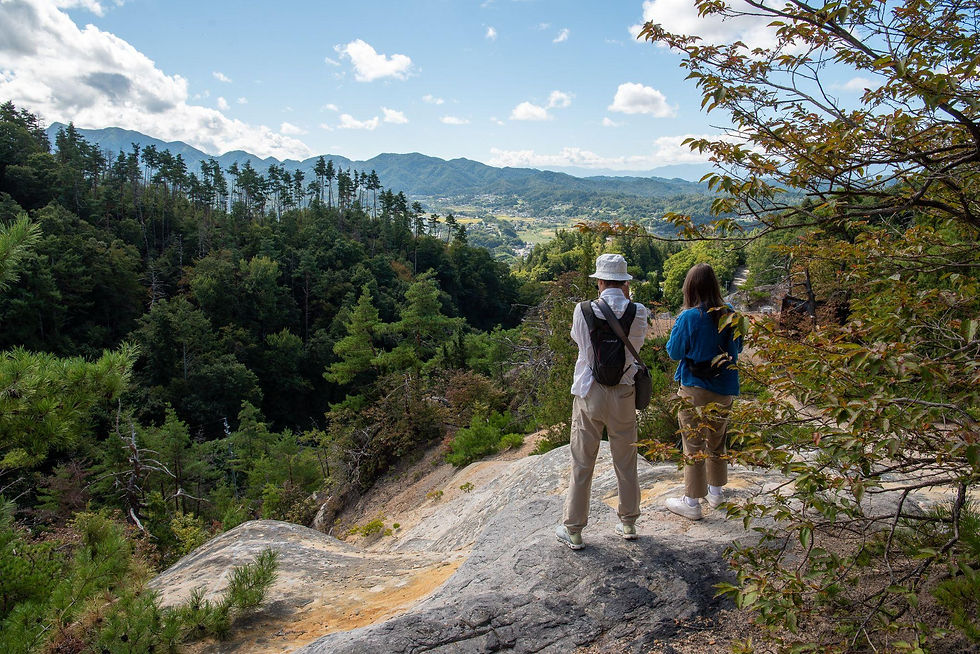
For those with a taste for mild adventure, guests can walk or cycle sections of the Zenkoji Kaidō — an old pilgrimage route passing through villages, fields, and temples shaped by centuries of devotional travel. Stays include the beautifully restored Satoyama Villa Honjin, an estate once used as an official lodging for the regional lord on his journey to Edo. The interiors are tastefully layered with samurai aesthetics, yet the rooms feel spacious and refined, each with a private en-suite bath. With French-influenced cuisine and an atmosphere that echoes the spirit of medieval travel, this property is a perfect fit for guests driving, cycling, or walking along the Zenkoji Kaidō.
Matsumoto’s appeal doesn’t lie in any single highlight, but in the way its elements connect. Town life, craft traditions, rural landscapes, and mountain routes are all close at hand, allowing travelers to stay in one place while experiencing many layers of the region. The castle is not the destination — but rather an elegant metaphor for this town that has retained its traditional way of life and sense of place through the ages.


Comments